
Welcome to CNAV

The Community Newspaper Association of Victoria (CNAV) is the peak body representing not-for-profit community newspapers across Victoria.

CNAV works actively with its members to enhance the capacity and standing of community newspapers, to enable them to fully realise their vital role in communities.

NEWS
Greetings from Canberra

Greetings from Canberra

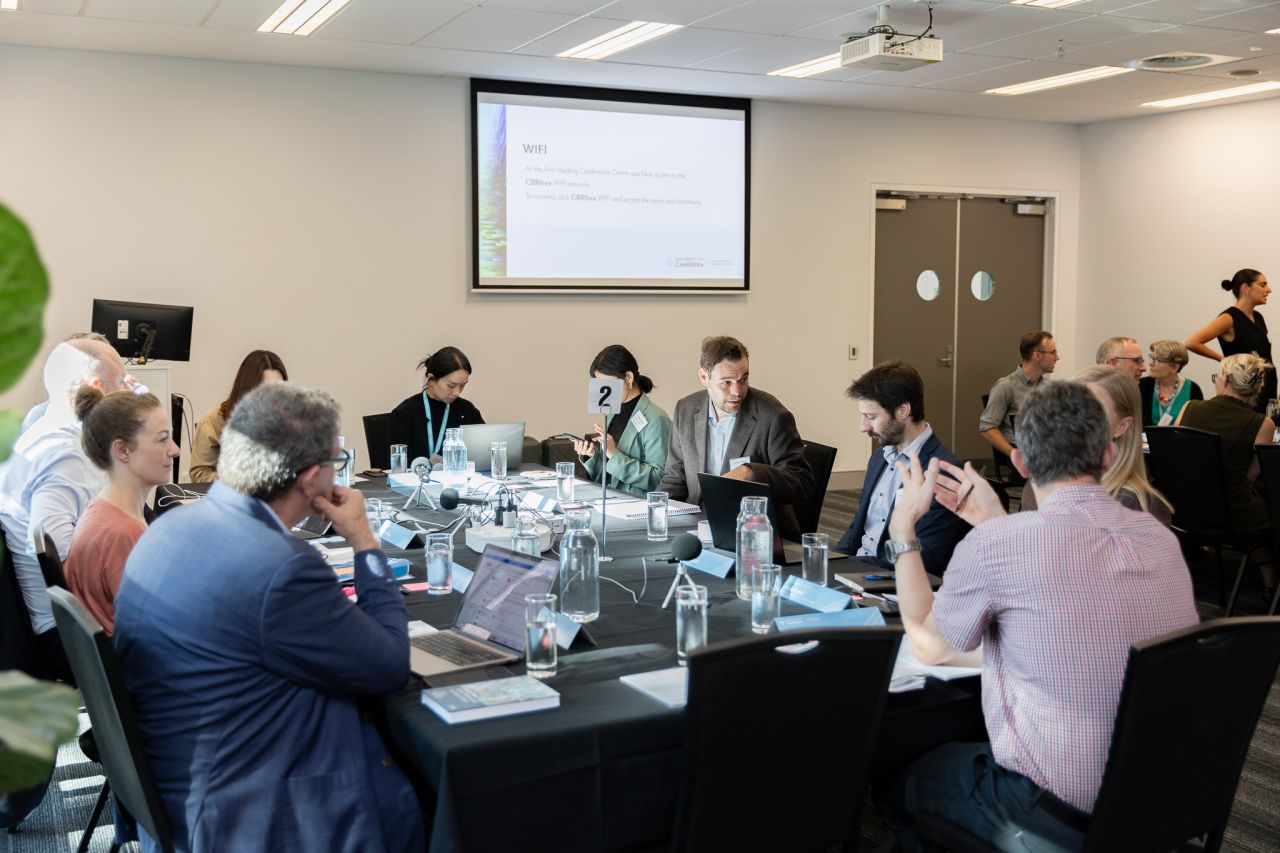
Following my participation in the Australian Local News Resilience Project in 2024, I was invited, as the CNAV President, to the News Futures: Media Policy Roundtable at the University of Canberra.
A project of the University of Canberra’s News and Media Research Centre, the half-day event was a mix of academics from the News and Media Research Centre, as well as other universities, representatives from the Federal Government, specifically the Department of Infrastructure, Transport, Regional Development, Communications,
Sports and The Arts, and representatives from the world of Journalism: The ABC, SBS, The Australian, 7News, Country Press Australia, Local and Independent News Association (LINA), and me, as President of the Community Newspaper Association of Victoria.
This may be a first for CNAV (or at least in some time), where we have been literally at the table and part of the discussion to shape future media policy in Australia.
It is, hopefully, the first of many such discussions, but we shall see.
A research paper, the basis for this roundtable, outlined research showing a growing distrust of the media in Australia, with surveys suggesting 67-71 per cent of Australians now avoid news and a decline in trust of news “brands”.
This resulted in a loss of advertising revenue and the contracting/closure of mastheads.
It is worth noting that these surveys and the data are focused on the big news brands, and often, the local and hyperlocal mastheads (like ours) are not counted in the data.
So, while it may look bad for the big mastheads, it should be noted that, generally, the small, hyperlocal publications are doing quite well.
The research paper (and current policy) often excludes smaller publishers and new media just because we are not as readily available (data-wise) or necessarily engaged in
the same way as Fairfax, News Corp, etc., but by being part of this conversation, we were able to begin the conversation about changing this, so we are represented and consulted on these issues.
Other topics discussed were the impact of AI on journalism, and policies such as the News Media Bargaining Code and the Federal Government’s Journalism Assistance Program.
Note (and I voiced this in the discussions), policies like the News Media Bargaining Code and the Journalism Assistance Fund, impact small publishers but rarely carry any benefit to us as we are often not big enough (i.e. employ full-time journalists) or structured in a way to benefit from the positive effects of these policies and grants.
This contributed to a discussion that the Federal Government recognises that the media landscape in Australia is diverse, and the measurement for identifying what journalism is, who is a journalist, and what qualifies for support needs to be broadened and redefined to accommodate publishers and new media that are falling under the radar.
We then split off into groups (pre-defined) and discussed:

  • Improving engagement and trust among Australians
  • Challenges and responses to AI in journalism
  • Sustainability of Public Interest Journalism

The outcomes of these discussions will be released by the Research Centre once the academics have processed the conversations (they have a lot of work cut out for them), and I will share that paper with you when it is published.
I was placed in the group discussing the impact of AI, and we had a healthy and constructive discussion about the challenges newspapers are facing in terms of Transparency of the technology, trust in the technology, maintaining authenticity, accuracy, and integrity in journalism, and the environmental impact.
The discussion also touched on the more general issue of digital literacy – specifically around AI.
The general vibe was that everyone in the room shared a similar view on many of the issues discussed, which is reassuring, and you should all know that the issues we face in the newsroom are the same issues the large commercials are facing.
This Roundtable, while largely an academic exercise, did have input/interest from the Federal Government; there is hope that the eventual report will go towards shaping media policy, and support through grants and other funding initiatives, and CNAV is directly involved in that discussion, ensuring our sector of Australian media is more readily included in future developments.
There were a lot of people in a relatively small room, and one had to be heard to make an impression (ask questions and contribute with gusto) — that was achieved.

James Poyner
President, Community Newspaper Association of Victoria

2025 CNAV Conference

2025 CNAV Conference

Award results list 2025


Best feature story

Finalists

Tallangatta Herald

Warrandyte Diary

Ferntree Gully News

Winner

Gisborne Gazette


Best editorial comment

Finalists

Ferntree Gully News

Ballarat East Community Newsletter

Manningham and Nillumbik Bulletin

The Wombat Post

Chewton Chat

Winners

North and West Melbourne News

Tallangatta Herald


Best history story

Finalists

HillsNews

Warrandyte Diary

Winner

Village Bell


Best photograph

Finalists

Warrandyte Diary

Tallangatta Herald

Winner

Lorne Independent


Best sports reporting

Finalists

Warrandyte Diary

Manningham & Nillumbik Bulletin

Winner

Connecting Sebastopol Community News


Best writing by a person 18 years or younger

Finalists

Prom Coast News

Churchill & District News

Winner

Boronia & The Basin Community News


Best community content

Finalists

Gisborne Gazette

Ferntree Gully News

Winner

Village Bell


Best design & layout

Finalists

Warrandyte Diary

North & West Melbourne News

Winner

The Westsider


Best newspaper

Winner

Gisborne Gazette

North and West Melbourne News

SpringDale Messenger

Waranga News

Yackity Yak

See more details and photographs on the Conferences page


Archived news items are available here.

NOTICES

Legal Deposit

Legal deposit what is it?   

If you publish a work in Victoria – that is, make material available to the public for sale, to registered members or free of charge – you are required to send one copy to the Library within 60 days of publication.

Legal deposit, which has its origins in the Copyright Act 1869, has helped to preserve and maintain a lasting record of Victoria’s publishing history. It has also enabled the The State Library of Victoria to collect Victorian publications not held in other libraries, providing valuable material for researchers. The National Library of Australia also wants to receive copies of community paper publications.

See detailed information here https://www.slv.vic.gov.au/help/copyright-legal-deposit/legal-deposit. Contact SLV if you need any more information.

Recently CNAV received correspondence from the State Library of Victoria. Apparently a number of community papers have got behind in submitting their papers to the library. The pandemic may have been a major reason why papers overlooked sending their papers in. Some papers may have  changed their editors or support staff and forgot to tell them about legal deposit. Some of our newer members may not have started submitting their papers yet.

As major libraries are digitising their resources, it is easier for papers to email their issues as digital copy. It can now be done through a single online service – National edeposit (NED) at https://www.ned.gov.au/ned/

Managing government advertising

The Victorian State Government has recently appointed OmniMedia as their advertising agent. OmniMedia have asked the committee to let our members know that they are keen to work with community newspapers, but they have had some difficulty managing the timelines that some volunteer run papers work to. Here are a few steps that will facilitate the government advertising process.

  • Always keep your deadlines and advertising rates up to date at our broker portal cnav.in
  • When Bill Penrose from PAS sends you a booking order, please respond to it, either affirmatively or negatively.
  • Once the ad is available, if you are uncomfortable printing it, please let Bill know immediately that you won’t be running it.
  • Once the advertisement has been published, please make sure you get your invoice to PAS/Bill Penrose within 2 weeks. We appreciate that some papers invoice less frequently than others, but it is certainly possible to issue a single invoice to meet the government advertising timelines rather than waiting to send out a whole batch. Lack of prompt invoicing is a major headache for OmniMedia as they need to report back to government on placement of ads and costs within a tight timeline.
  • Always send a tear sheet with your invoice. Once upon a time, a tear sheet was the page of the news- paper on which the ad was placed torn out and posted with the hard copy invoice. If you invoice electronically, please send a pdf or jpg of the page. If you aren’t comfortable with converting the file, just take a photo of the page on your phone and send that through. At the very least, send a torn- out page of your newspaper by post and make a note of this on the email your invoice is attached to.
  • To make sure your invoice is found and processed in time, make sure your email header starts with ‘CNAV’ and your paper name.
  • Make sure your order number is included in your invoice.

Electoral advertisements

All electoral advertisements (not just at election time) at Federal, State and Local government levels must include the name and address of the person who authorised the advertisement.  The address must be a full street address and suburb or locality.

Note:      See sub-section 328 (1) of the Commonwealth Electoral Act 1918 and sub-section 83(1) of the Victorian Electoral Act 2002).  Under sub-section 328(5) of the Commonwealth Act, the address of a person means an address, including a full street address and suburb or locality, at which the person can usually be contacted during the day. It does not include a post office box.  Under section 3 of the Victorian Act, address does not include a post-office box.

Useful Links

Our Community

Our Community is Australia’s Centre for Excellence for the nation’s 600,000 not-for-profits & schools, providing advice, tools, resources and training.   https://www.ourcommunity.com.au/

The Citizen

The Citizen is an online publication of the Centre for Advancing Journalism